
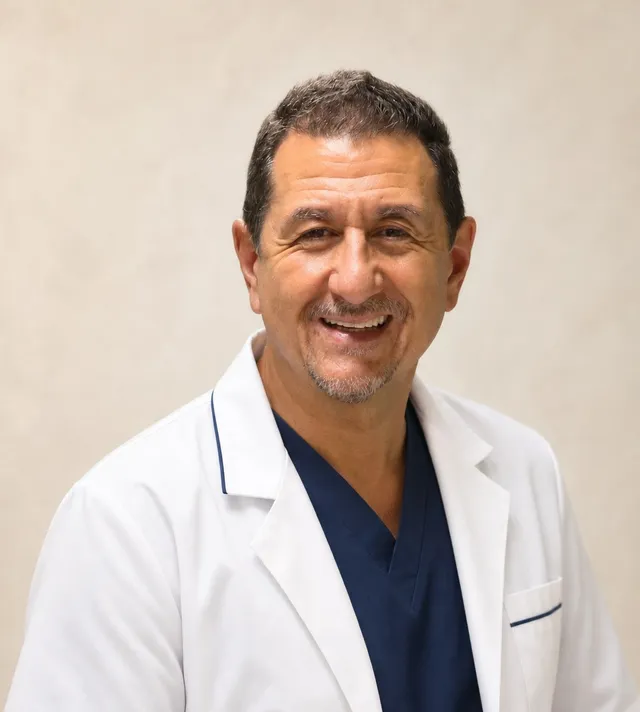
Dimitrije Filipović
DVM
Founder and owner of the clinic; over 20 years in veterinary medicine for dogs and cats, with a special interest in internal medicine.
Services
Internal medicine covers the digestive, respiratory and cardiovascular systems in dogs and cats — everything that isn't visible from the outside, but affects how your pet feels, eats and breathes.
The exam always starts with a conversation: what you've noticed, since when, and whether there have been earlier illnesses, injuries or procedures. Only then comes the clinical exam, and if needed, additional diagnostics:lab tests orultrasound or X-ray, all done in the same clinic, with no referral to another vet.
This service is for pets showing general signs of illness — changes in appetite, behavior, breathing or digestion. Skin, dental or surgical problems have their own dedicated pages: dermatology,dentistry andsurgery.
Temperature measurement is the first step — an elevated or lowered reading immediately signals something is off and guides the rest of the exam.
Auscultation of the heart, lungs and abdomen reveals heart murmurs, breathing changes or unusual abdominal sounds, without needing extra equipment.
Examination of the mouth, throat, eyes and lymph nodes rounds out the picture of overall health and helps spot signs of infection or inflammation.
A detailed history — how your pet has been behaving before the visit, the reason for the visit, earlier illnesses, injuries or procedures — points the vet toward what measurement and auscultation alone can't show.
DVM
Founder and owner of the clinic; over 20 years in veterinary medicine for dogs and cats, with a special interest in internal medicine.
Guide for owners
Internal medicine covers a wide range of general illness signs. Call the clinic if you notice any of the following in your dog or cat:
These are general pointers, not a diagnosis. the exact cause is determined by an exam.
Exam process
Booking
You book the exam by phone or email; if needed, you'll get a note on how to prepare before your visit.
History
At the start of the visit we talk about what you've noticed, how long it's been going on, and any earlier illnesses or injuries.
Clinical exam
Next comes temperature measurement, auscultation of the heart, lungs and abdomen, and examination of the mouth, throat, eyes and lymph nodes.
Decision on further tests
If the findings call for it, additional tests are suggested:lab tests or anultrasound or X-ray exam, all in the same clinic.
Results and next steps
We go over the findings with you, explaining the diagnosis and proposed treatment or monitoring.
Internal Medicine
Internal medicine at the clinic
A complete blood count with an automated hematology analyzer, with results in a few minutes.
Biochemistry panels are run on blood serum, plasma, urine or cerebrospinal fluid.
Done with several methods: test strips, refractometer, an automated biochemistry analyzer and microscopic sediment examination.
They’ve been caring for my pets for years and I’d never switch clinics. Very professional and thorough, and always available in emergencies.
Mon–Fri 10am–2pm & 4pm–7pm · Sat 10am–1pm · Emergencies by phone, available 24/7